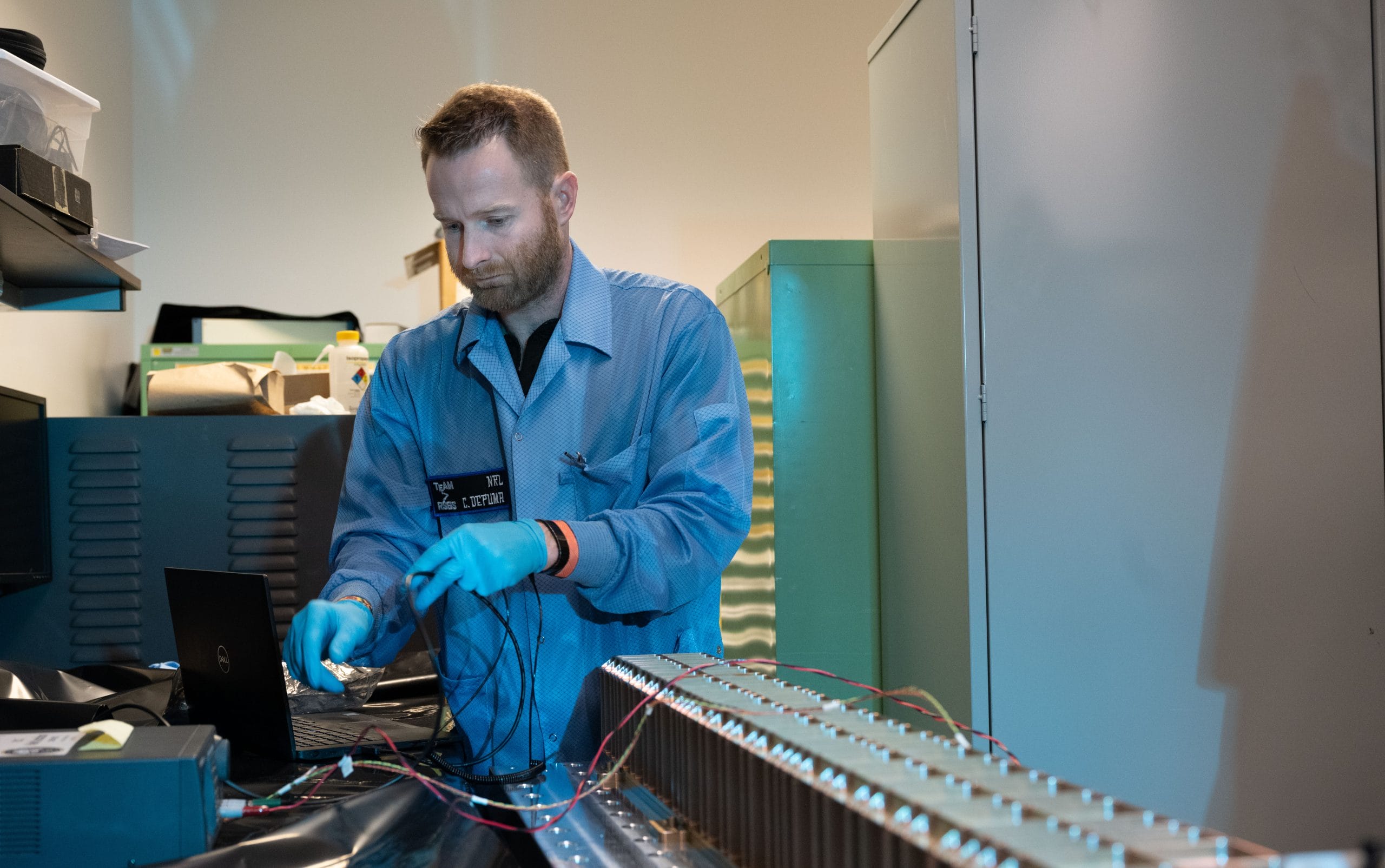
220304-N-XG408-005
220304-N-XG408-014
WASHINGTON, March 14, 2023 (GLOBE NEWSWIRE) — The U.S. Naval Research Laboratory is set to launch the Space Wireless Energy Laser Link (SWELL) to demonstrate laser power beaming in space as part of the scheduled U.S. Department of Defense Space Test Program (STP) H9 mission to the International Space Station (ISS) March 15.
SWELL is one of several experiments that will launch aboard the SpaceX Dragon cargo vehicle to the ISS for the yearlong mission to collect data during a laser power beaming link in space conditions. The experiment, which is sponsored by the Office of the Under Secretary of Defense for Acquisition & Sustainment (OUSD (A&S)) and supported by the Operational Energy Capability Improvement Fund (OECIF), will explore challenges for power beaming’s viability for space applications, and also highlight the possibilities for using power beaming to address energy challenges on Earth.
“With this modest experiment, we will identify key focus areas for developing links of greater power and longer distance for space,” said Paul Jaffe, Ph.D., Electronics Engineer and SWELL Principal Investigator. “By employing laser transmitters and photovoltaic receivers, power beaming links will be established that will pave the way for rapid, resilient, and flexible energy delivery systems.”
Power beaming is a means of delivering energy in the form of electromagnetic waves that does not require the transport of mass, so energy can be sent almost instantly. Its feasibility and safety have been proven on the ground, and now these efforts are expanding to space.
“This is the next step in extending this capability for space, lunar, and planetary applications,” said Chris DePuma, SWELL Program Manager. “Power beaming is poised as a critical enabler for power distribution on the moon and elsewhere in space.”
The yearlong SWELL experiment should provide data that shows how the hardware functions in the space environment and show which constraints are likely to affect the deployment of future operational systems.
By eliminating the need for moving fuel or batteries, or for stringing wires, SWELL could be a compelling option for the utilization of lunar resources and development on the Moon.
“Power beaming might also be used for distributing power for and around Earth, including from satellites that collect solar energy in space,” Jaffe said. “SWELL is the next step into this new frontier.”
About the U.S. Naval Research Laboratory
NRL is a scientific and engineering command dedicated to research that drives innovative advances for the U.S. Navy and Marine Corps from the seafloor to space and in the information domain. NRL is located in Washington, D.C. with major field sites in Stennis Space Center, Mississippi; Key West, Florida; Monterey, California, and employs approximately 3,000 civilian scientists, engineers and support personnel.
Attachments
CONTACT: Corporate Communications U.S. Naval Research Laboratory (202) 480-3746 [email protected]
 Disclaimer: The above press release comes to you under an arrangement with GlobeNewswire. IndiaChron.com takes no editorial responsibility for the same.